



Library
A structured collection of articles, Claude Gordon recordings, and study materials organized within a systematic approach to trumpet pedagogy.
The Library brings together the Clarke-Gordon tradition in one place—allowing serious players to study concepts, trace ideas, and connect recordings, written material, and practical application.
Featured from the Library
A starting selection across recordings, articles, method books, masterclasses, videos, and short answers.

Claude Gordon - Master Teacher (The Brass Herald)
View resource
Claude Gordon Playing Auld Lang Syne
View resource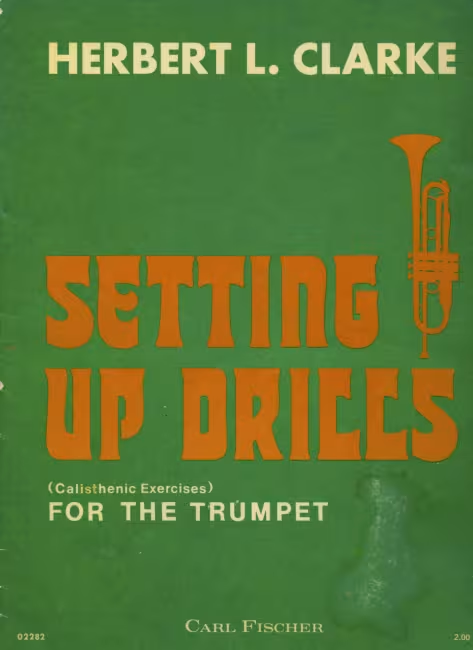
Herbert L. Clarke's Setting Up Drills
View resource
Trumpet Lessons with Claude Gordon - Dr. Larry Miller, M.D. and Jeff Purtle
View resource
WIND POWER & THE TONGUE — Purtle Brass Conference 2010 · I
View resource
How Long Does It Take To Complete Clarke's Technical Studies?
View resourceBrowse the Complete Library
Filter by category or search by title to explore the complete public collection.
Hit It Hard and Wish It Well
Hit It Hard and Wish It Well was Claude Gordon's admonition for fearless, committed playing. It works with Big Breath Chest Up, Wind Power, Tongue Level, and confidence.
View ResourceThe First Things I Look At When Diagnosing a Trumpet Player
Diagnostic trumpet pedagogy requires a hierarchy of causes. Jeff Purtle looks first at Big Breath Chest Up, Wind Power, Tongue Level, freedom versus stiffness, and what the student is practicing before blaming lips, pressure, mouthpieces, or equipment.
View ResourceFreedom in Trumpet Playing
Freedom in trumpet playing is the result of correct coordination. Freedom develops when Wind Power, Tongue Level, and the Seven Basic Items work together and the player allows the air to do the work.
View ResourceWhy Do My Lips Hurt
Lip pain is usually a symptom, not the diagnosis. Players often experience soreness because the lips are being asked to do work that should be done by Wind Power, Tongue Level, coordination, rest, and systematic development.
View ResourceConfidence in Trumpet Playing
Confidence is not positive thinking. Confidence develops when the player understands cause and effect, trusts the process, and experiences reliable results through correct coordination.
View ResourceRest Fatigue and Tightness in Trumpet Playing
Tightness and fatigue are often symptoms of poor practice structure. Resting too late, playing material beyond current development, and practicing while tired can solidify bad habits.
View ResourceAccuracy in Trumpet Playing
Students often ask why they miss notes, crack notes, overshoot notes, or play inconsistently. In diagnostic trumpet pedagogy, these are symptoms. The first step is to observe tongue level and understand the cause.
View ResourceCorrect Diagnosis in Trumpet Playing
Correct diagnosis is the first step in solving trumpet playing problems. A missed note, cracked note, poor response, weak range, or tired embouchure is a symptom. The real question is what physical cause produced the symptom.
View ResourceResponse in Trumpet Playing
Response problems are not simply tonguing problems. Notes that do not start cleanly often involve mouthpiece placement, free vibration, stiffness, tongue level, wind power, and whether the air is doing the work.
View ResourceRange in Trumpet Playing
Range is not built by forcing the lips higher. In the Clarke-Gordon tradition, range develops through wind power, tongue level, freedom, coordination, and letting the air save the lip.
View ResourceEndurance in Trumpet Playing
Endurance is not simply stronger lips. In diagnostic trumpet pedagogy, tired chops often point to inefficient coordination, pressure, stiffness, weak wind power, poor rest, or the lips doing the work of the air.
View ResourceTongue Level in Trumpet Playing
Tongue Level is the unique position and feel for every note. In the Claude Gordon system, students learn to Watch The Tongue, memorize the feel of notes, and coordinate tongue level with wind power so the air does the work.
View Resource