



Library
A structured collection of articles, Claude Gordon recordings, and study materials organized within a systematic approach to trumpet pedagogy.
The Library brings together the Clarke-Gordon tradition in one place—allowing serious players to study concepts, trace ideas, and connect recordings, written material, and practical application.
Featured from the Library
A starting selection across recordings, articles, method books, masterclasses, videos, and short answers.
Claude Gordon - Master Teacher (The Brass Herald)
View resource
Claude Gordon Playing Auld Lang Syne
View resource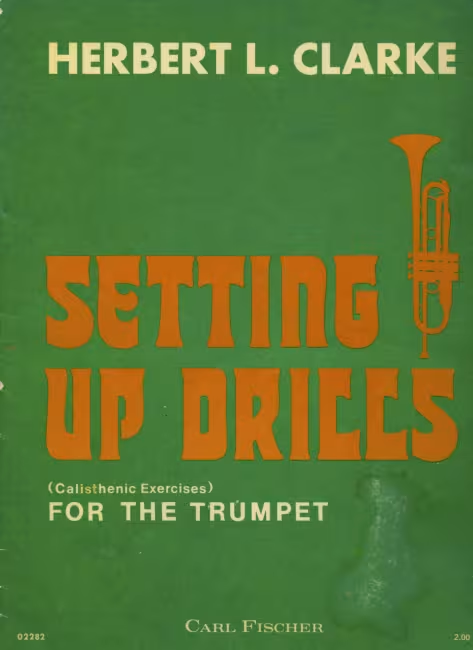
Herbert L. Clarke's Setting Up Drills
View resource
Trumpet Lessons with Claude Gordon - Dr. Larry Miller, M.D. and Jeff Purtle
View resource
WIND POWER & THE TONGUE — Purtle Brass Conference 2010 · I
View resource
How Long Does It Take To Complete Clarke's Technical Studies?
View resourceBrowse the Complete Library
Filter by category or search by title to explore the complete public collection.
Sound
A good sound is a free vibration. Sound is the audible result of the entire playing system and develops through resonance, coordination, efficiency, and musical concept.
View ResourceFlexibility
Flexibility is not merely lip slurs. It connects range into usable, agile playing by coordinating Wind Power, Tongue Level, response, resonance, and efficient movement.
View ResourceThe Lips
The Lips are one of the Seven Basic Items. Their function is to vibrate in response to the air, not to do the work that belongs to Wind Power, Tongue Level, and correct coordination.
View ResourceThe Muscles of the Face
The Muscles of the Face are one of the Seven Basic Items. They support the playing system, but they should not replace the work of the air, tongue, or correct coordination.
View ResourceCorrect Diagnosis
Correct Diagnosis identifies the actual cause of a trumpet problem rather than reacting only to symptoms. It connects cause and effect, compensation, coordination, practice structure, and the Seven Basic Items.
View ResourceConfidence
Confidence is not guessing or positive thinking. It is trust in dependable causes built through Correct Diagnosis, Cause and Effect, Habit Formation, Practice Structure, and reliable playing experience.
View ResourceFreedom
Freedom is not doing whatever you want. Freedom is the ability to express musical intention reliably through a coordinated playing system built by correct causes, discipline, confidence, and habit formation.
View ResourceCause and Effect
Cause and Effect means trumpet results come from causes. Practice only improves playing when it trains the causes that produce reliable sound, response, accuracy, range, endurance, confidence, and freedom.
View ResourceSystem Integration
System Integration means the parts of trumpet playing cooperate rather than contradict one another. Correct playing comes from Wind Power, Tongue Level, Wind Control, Resonance, Coordination, Practice Structure, and Habit Formation working together.
View ResourceEquipment Chasing
Equipment Chasing is the habit of searching for mouthpieces, trumpets, leadpipes, or gadgets to solve problems that may actually require correct diagnosis and better coordination.
View ResourceSymptom Chasing
Symptom Chasing means reacting to where a trumpet problem is felt instead of identifying the cause. Correct Diagnosis traces symptoms back to causes.
View ResourceHabit Formation
Habit Formation means repeated actions become tendencies. Practice builds whatever is repeated, so correct practice must reinforce coordination instead of compensation.
View Resource