



Library
A structured collection of articles, Claude Gordon recordings, and study materials organized within a systematic approach to trumpet pedagogy.
The Library brings together the Clarke-Gordon tradition in one place—allowing serious players to study concepts, trace ideas, and connect recordings, written material, and practical application.
Featured from the Library
A starting selection across recordings, articles, method books, masterclasses, videos, and short answers.

Claude Gordon - Master Teacher (The Brass Herald)
View resource
Claude Gordon Playing Auld Lang Syne
View resource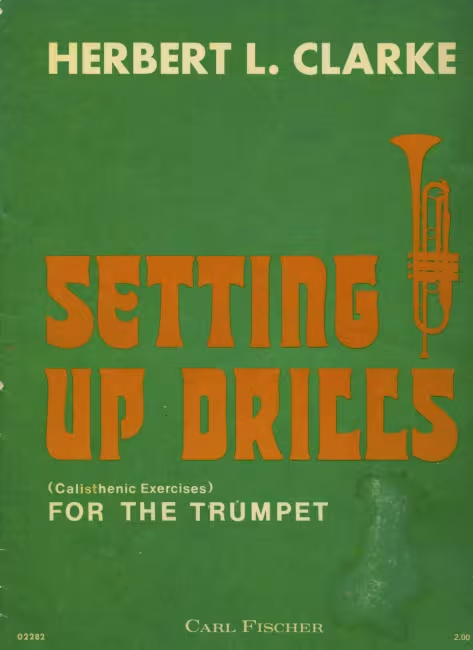
Herbert L. Clarke's Setting Up Drills
View resource
Trumpet Lessons with Claude Gordon - Dr. Larry Miller, M.D. and Jeff Purtle
View resource
WIND POWER & THE TONGUE — Purtle Brass Conference 2010 · I
View resource
How Long Does It Take To Complete Clarke's Technical Studies?
View resourceBrowse the Complete Library
Filter by category or search by title to explore the complete public collection.
Tongue Level
Tongue Level is the learned tongue position and feel for each note, helping channel pitch, improve response, and develop accuracy through systematic practice.
View Resource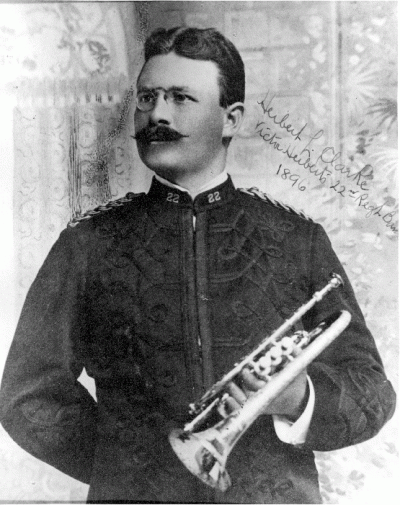
Clarke Autobiography — Chapter 12: PATIENCE, PERSEVERANCE AND PERSISTENCE I GET TIPS FROM ROGERS ARRANGING AS AN AID TO STUDY BRASS QUARTET BECOMES CHURCH CHOIR MAKING MONEY THROUGH MUSIC
Chapter 12 of Herbert L. Clarke’s autobiography emphasizes disciplined practice routines, systematic study, and the role of patience, perseverance, and persistence in musical development. It provides a detailed view of structured daily work and its impact on technique, coordination, and overall musicianship.
View ResourceClarke Autobiography — Chapter 11: CHANGING THE BASIC FOUNDATION A TORCHLIGHT TEST FROM TORCHLIGHTS TO FOOTLIGHTS
Chapter 11 of Herbert L. Clarke’s autobiography examines the evolution of playing technique and the necessity of adapting methods to achieve ease and musical results. It offers insight into embouchure considerations, individual differences, and the practical search for efficient brass playing.
View ResourceClarke Autobiography — Chapter 10: I RE-ENTER SCHOOL A NEW TECHNIQUE REVEALED I TRY TO FATHOM THE SECRET
Chapter 10 of Herbert L. Clarke’s autobiography explores his return to disciplined study, continued band development, and the search for improved technique. It highlights the role of focused work, gradual advancement, and the early pursuit of efficiency in brass playing.
View ResourceClarke Autobiography — Chapter 9: RESUMPTION OF THE STORY RETURN TO HEALTH A PAID PROFESSIONAL PERFORMER
Chapter 9 of Herbert L. Clarke’s autobiography recounts his recovery from illness and the challenges of rebuilding his playing from the beginning. It provides insight into resilience, physical conditioning, and the persistence required to restore technique and continue musical development.
View ResourceClarke Autobiography — Chapter 8: A BIT OF BOYISH POPULARITY AN EMBOUCHURE EXPERIENCE MERCANTILE VERSUS THE MUSICAL
Chapter 8 of Herbert L. Clarke’s autobiography presents key early lessons in embouchure development, practice structure, and the importance of rest and consistency. It highlights the transition toward disciplined routine and the gradual strengthening required for reliable tone, endurance, and control.
View ResourceClarke Autobiography — Chapter 7: BAND DUTY IN FULL REGIMENTALS AND BELOW ZERO I AGE RAPIDLY PRIDE SUSTAINS
Chapter 7 of Herbert L. Clarke’s autobiography describes his early band experience, including instrument care, developing confidence, and the discipline required in regimental playing. It offers practical insight into responsibility, preparation, and the foundational habits that support consistent musical development.
View ResourceClarke Autobiography — Chapter 6: "KNOCKING OFF" AN OPPORTUNITY THE MOMENTOUS TRY-OUT A GREAT BANDMASTER MY BEGINNING AS A BANDSMAN
Chapter 6 of Herbert L. Clarke’s autobiography details his first opportunity to join a regimental band and the decisive moments that led to his beginnings as a bandsman. It illustrates the role of initiative, mentorship, and early professional experiences in shaping his path toward a career in brass performance.
View ResourceClarke Autobiography — Chapter 5: BRANCHING OUT A BIT A HARD-EARNED THREE DOLLARS THE OBSESSING CORNET
Chapter 5 of Herbert L. Clarke’s autobiography describes his early musical growth alongside an active childhood, including his first paid playing experiences and increasing dedication to the cornet. It provides insight into the transition from casual playing to focused development and the beginnings of serious musical ambition.
View ResourceClarke Autobiography — Chapter 4: AMATEUR ADVANCEMENT SOME IMPORTANT LESSONS THE CORNET CONQUERS
Chapter 4 of Herbert L. Clarke’s autobiography recounts his early struggles on brass instruments, initial technical limitations, and gradual musical development through amateur performance. It highlights the importance of persistence, early experimentation, and foundational experiences that contributed to his eventual mastery and understanding of cornet playing.
View ResourceClarke Autobiography — Chapter 2: THE CLARKE FAMILY CHILDHOOD DREAMS THE IMPORTANCE OF THOROUGHNESS THE BAND FEVER
Chapter 2 of Herbert L. Clarke’s autobiography traces the musical family environment, childhood influences, and early experiences that shaped his development as an artist. It provides historical insight into the foundations of Clarke’s musical discipline, family background, and the formative atmosphere that contributed to his later importance in brass pedagogy.
View ResourceClarke Autobiography — Chapter 15: WE DO NOT GO TO WAR "TRYING IT ON THE DOG" THE QUESTION OF LIVING
Chapter 15 of Herbert L. Clarke’s autobiography recounts his experiences balancing work, band playing, and growing musical ambition. It illustrates the realities of early professional life and the continued drive toward musical development despite practical obligations.
View Resource