



Library
A structured collection of articles, Claude Gordon recordings, and study materials organized within a systematic approach to trumpet pedagogy.
The Library brings together the Clarke-Gordon tradition in one place—allowing serious players to study concepts, trace ideas, and connect recordings, written material, and practical application.
Featured from the Library
A starting selection across recordings, articles, method books, masterclasses, videos, and short answers.
Claude Gordon - Master Teacher (The Brass Herald)
View resource
Claude Gordon Playing Auld Lang Syne
View resource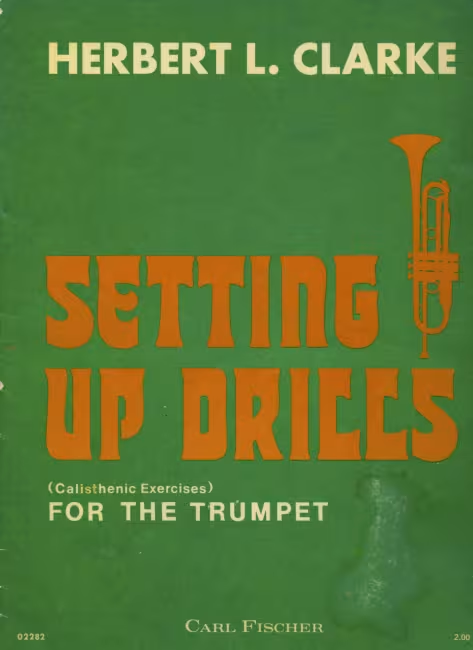
Herbert L. Clarke's Setting Up Drills
View resource
Trumpet Lessons with Claude Gordon - Dr. Larry Miller, M.D. and Jeff Purtle
View resource
WIND POWER & THE TONGUE — Purtle Brass Conference 2010 · I
View resource
How Long Does It Take To Complete Clarke's Technical Studies?
View resourceBrowse the Complete Library
Filter by category or search by title to explore the complete public collection.
Personal Variation vs Physical Reality
Players vary personally, but efficient trumpet playing still follows physical realities that must be diagnosed and understood.
View ResourceNecessary Causes vs Helpful Conditions
Helpful conditions may support trumpet playing, but they are not always the necessary causes of reliable playing.
View ResourceWhy Do My High Notes Crack?
Cracked high notes are symptoms. Correct diagnosis looks for causes such as Wind Power, Tongue Level, response, hesitation, fatigue, pressure, and coordination.
View ResourceWhy Can't I Play High Notes?
High notes are often misunderstood. Correct diagnosis looks for causes such as Wind Power, Tongue Level, response, confidence, range development, compensation, and coordination.
View ResourceWhy Do I Run Out Of Chops?
Running out of chops is usually a symptom of inefficient function, fatigue, pressure, poor Wind Power, poor Tongue Level, or poor practice structure.
View ResourceWhy Do My Lips Get Tired?
Tired lips are usually a symptom, not the diagnosis. Correct diagnosis looks for causes such as Wind Power, Tongue Level, pressure, fatigue, coordination, and poor practice structure.
View ResourceWhy Do My High Notes Disappear?
High notes rarely disappear without a cause. Correct diagnosis looks for Wind Power, Tongue Level, response, fatigue, pressure, confidence, and coordination.
View ResourceWhy Is My Range Inconsistent?
Inconsistent range is usually a symptom. Correct diagnosis looks for Wind Power, Tongue Level, response, fatigue, confidence, pressure, compensation, and coordination.
View ResourceWhy Do I Have To Force High Notes?
Forced high notes are usually symptoms. Correct diagnosis looks for Wind Power, Tongue Level, response, confidence, pressure, compensation, and coordination.
View ResourceWhy Are High Notes Harder Some Days?
High notes can feel harder some days when Wind Power, Tongue Level, response, fatigue, confidence, pressure, rest, or coordination change.
View ResourceWhy Can't I Center Notes?
Difficulty centering notes is usually a symptom. Correct diagnosis looks for Wind Power, Tongue Level, response, accuracy, confidence, compensation, and coordination.
View ResourceWhy Do I Miss Attacks?
Missed attacks are usually symptoms. Correct diagnosis looks for Wind Power, Tongue Level, response, hesitation, confidence, coordination, and compensation.
View Resource